
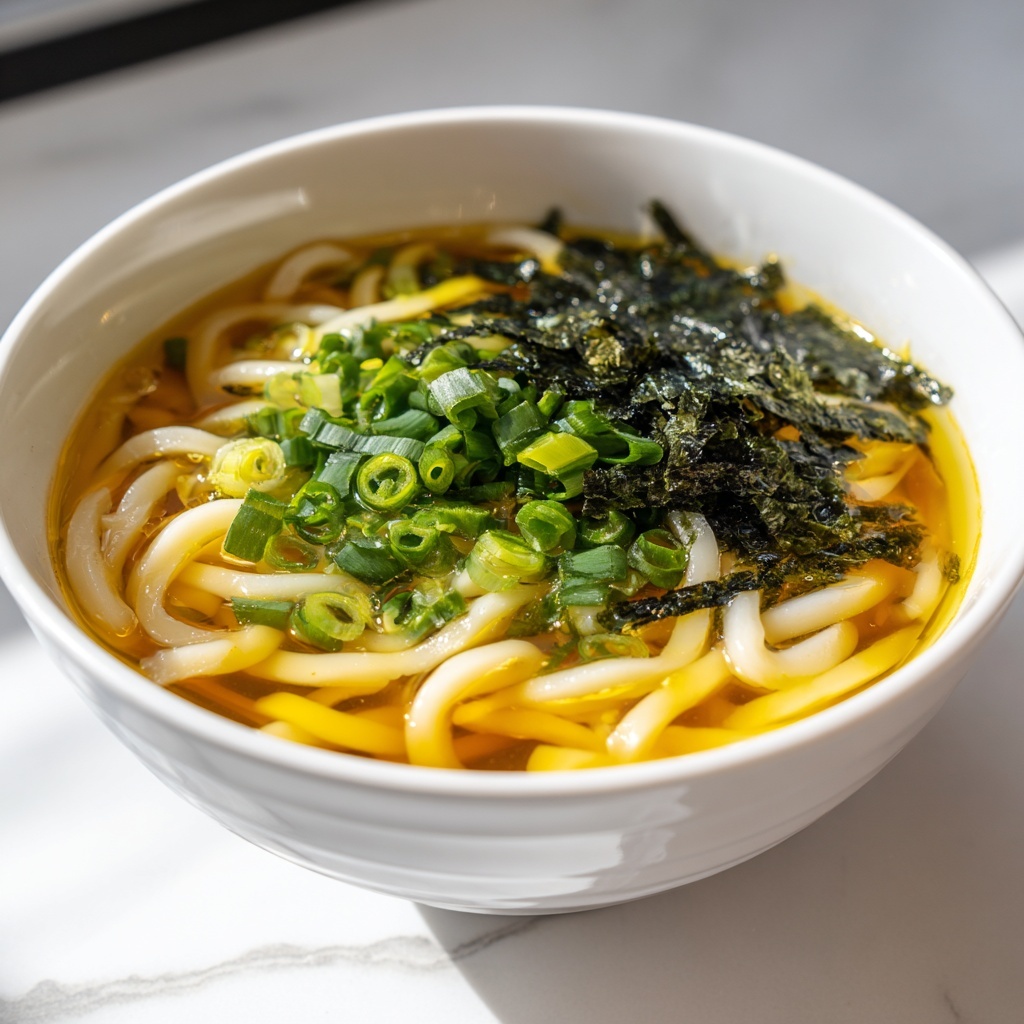
If you have ever wanted to experience a bowl of comforting warmth with simple yet profound flavors, this Japanese Udon Soup Recipe is just what you need. This delightful soup brings together soft, chewy udon noodles and a fragrant, savory broth infused with dashi kombu, soy sauce, and mirin. It is a beautiful harmony of texture and taste that feels like a cozy hug on a chilly day or a light, satisfying meal any time you crave something soothing and nourishing. Trust me, once you make this at home, it might just become your go-to recipe for a heartwarming dinner.
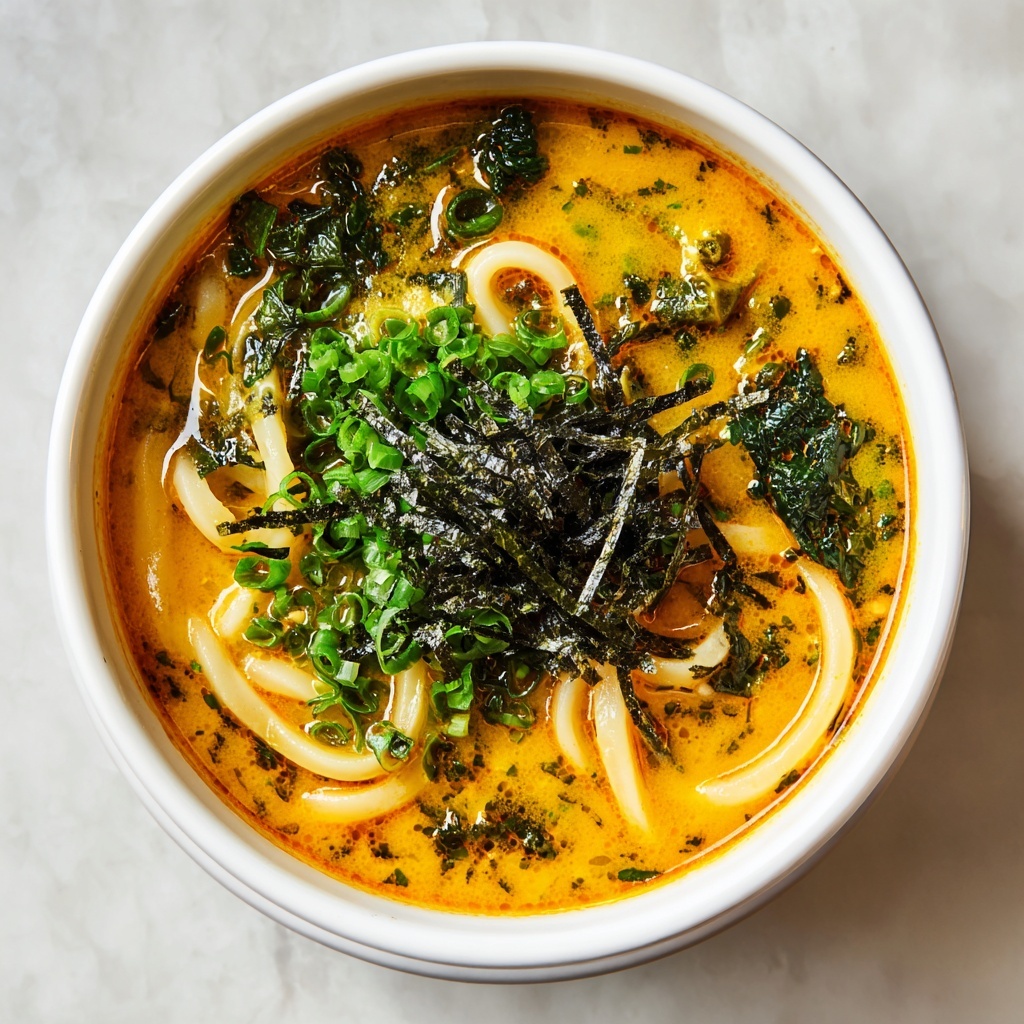
Ingredients You’ll Need
These ingredients might look straightforward, but every single one is essential to creating the perfect balance of umami, sweetness, and texture in this soup. The magic lies in their quality and how they come together to form a broth that’s both light and deeply flavorful.
- 4 cups water: The base of the broth, necessary for extracting flavors from the kombu and balancing the soup’s concentration.
- 1 piece dashi kombu (dried kelp) (about 4 inches): This gives the broth a subtle oceanic umami that is the soul of authentic Japanese soups.
- 2 tbsp soy sauce: Provides saltiness and color while adding layers of savory depth to the broth.
- 1 tbsp mirin: A sweet rice wine that softens and rounds out the broth’s flavor with a gentle sweetness.
- 1 tsp sugar: Enhances the mirin’s mild sweetness, balancing the saltiness of the soy sauce perfectly.
- 200 g udon noodles (fresh or dried): Thick, chewy noodles that carry the broth beautifully, making every bite delightfully satisfying.
- 2 green onions (thinly sliced): Adds freshness and a mild crunch, brightening each spoonful with their sharp aroma.
- 1 sheet nori (cut into strips): A final touch that brings subtle brininess and texture contrast to the dish.
How to Make Japanese Udon Soup Recipe
Step 1: Infuse the Broth
Start by soaking the dashi kombu in cold water for about 10 minutes. This step gently releases its savory, oceanic flavor into the water. Once steeped, warm the pot over medium heat until the water is almost boiling but not boiling. Removing the kombu just before the boil is key to prevent bitterness, ensuring a clear, delicate broth that forms the heart and soul of the soup.
Step 2: Season the Broth
Now add soy sauce, mirin, and sugar to the pot. These seasonings build layers of savory, sweet, and aromatic notes, harmonizing perfectly. Let the broth simmer for 5 minutes, allowing the flavors to meld into a beautifully balanced base that’s both rich and gentle on the palate.
Step 3: Cook the Udon Noodles
While the broth is simmering, cook your udon noodles according to the package instructions. Whether fresh or dried, making sure they remain tender yet chewy is essential. After cooking, drain and rinse them under cold water to stop the cooking process and remove excess starch, which keeps them from getting gummy and ensures each strand is perfectly springy.
Step 4: Assemble the Soup
Divide the cooked udon noodles between two bowls and ladle the hot, fragrant broth over them. The instant warmth softens the noodles while carrying the broth’s deep umami flavor right to your spoon. This assembly is simple but creates a satisfying, comforting bowl that’s ready to be garnished and enjoyed.
Step 5: Add the Finishing Touches
Sprinkle thinly sliced green onions and cut nori strips over the top. These garnishes add brightness, color, and texture contrasts that elevate the soup’s presentation and flavor. It’s these little additions that make your Japanese Udon Soup Recipe feel extra special and inviting.
How to Serve Japanese Udon Soup Recipe
Garnishes
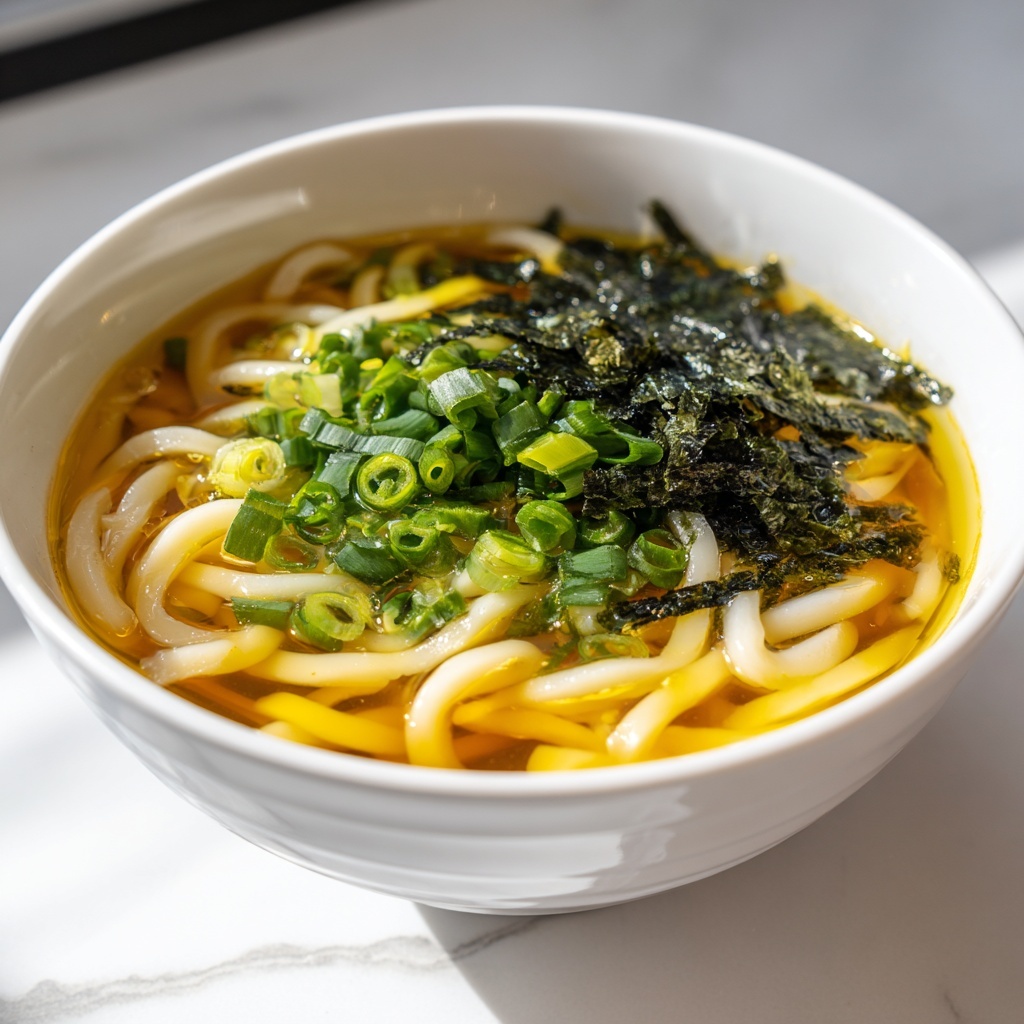
Green onions and nori strips bring fresh, aromatic qualities and a subtle crunch to the bowl, cutting through the silky broth. You can also add a soft-boiled egg or a sprinkle of toasted sesame seeds for extra richness and texture. These simple garnishes transform the dish from humble to extraordinary, making every bite exciting.
Side Dishes
This soup pairs wonderfully with light appetizers like pickled vegetables or a small serving of edamame. A side of tempura or crispy gyoza also complements the comforting softness of the udon, adding layers of texture and flavor diversity for a well-rounded meal experience.
Creative Ways to Present
Try serving the udon soup in rustic ceramic bowls to enhance the authentic feel or go for clear glass bowls to showcase the gorgeous golden broth and vivid green garnishes. For a fun twist, offer a small condiment tray with chili flakes, grated ginger, or shichimi togarashi, letting everyone customize their bowl for a personalized touch.
Make Ahead and Storage
Storing Leftovers
Leftover udon soup can be refrigerated in an airtight container for up to 2 days. It’s best to store the broth separately from the noodles to prevent them from becoming too soft or mushy. When ready to eat, combine them again for a fresher texture and flavor.
Freezing
You can freeze the broth without any problem by pouring it into a freezer-safe container. Thaw in the refrigerator overnight and then heat gently. Avoid freezing cooked noodles as they tend to lose their lovely chewy texture upon thawing.
Reheating
Reheat the broth slowly on the stove to retain its delicate flavors. Warm the noodles separately in hot water rather than microwaving directly to keep their ideal texture. Once both are hot, combine and enjoy your soup as fresh as the first time.
FAQs
Can I use instant dashi powder instead of kombu?
Absolutely! If kombu is hard to find, instant dashi powder is a convenient substitute that still delivers a nice umami base. Just adjust the amount according to the package instructions to keep the broth from becoming too strong.
Are fresh udon noodles better than dried?
Fresh udon noodles generally have a softer, more delicate bite, while dried noodles can be chewier. Both work well, so it depends on what you prefer or what’s available. Just be sure to cook them properly to maintain their best texture.
Can I add protein to this soup?
Definitely! Thinly sliced chicken, tofu, or even a soft-boiled egg can be added to make it a heartier meal. Simply cook or prepare the protein separately before adding it to the bowl when assembling the soup.
Is this recipe very salty?
No, the balance between soy sauce, mirin, and sugar keeps the broth flavorful without overwhelming saltiness. You can always adjust the soy sauce to taste if you prefer a lighter or stronger flavor.
How can I make the broth more flavorful?
For extra depth, you can add a small piece of dried shiitake mushroom during the broth simmering stage or a splash of sake. Just remember to remove any solids before serving to keep the broth clear and smooth.
Final Thoughts
This Japanese Udon Soup Recipe is a wonderful example of how simple ingredients can come together to create something truly heartwarming and delicious. It’s perfect for any occasion when you want comfort in a bowl without fuss. I encourage you to try this recipe and enjoy the lovely balance of flavors, the smooth noodles, and the cozy feeling it brings. It might just become a new favorite in your kitchen.
Print
Japanese Udon Soup Recipe
- Prep Time: 10 minutes
- Cook Time: 15 minutes
- Total Time: 25 minutes
- Yield: 2 servings
- Category: Soup
- Method: Stovetop
- Cuisine: Japanese
- Diet: Gluten Free
Description
A comforting and traditional Japanese Udon Soup featuring a flavorful kombu dashi broth seasoned with soy sauce, mirin, and sugar, served over chewy udon noodles and garnished with fresh green onions and nori strips. Perfect for a quick, warm meal that showcases authentic Japanese flavors.
Ingredients
Broth Ingredients
- 4 cups water
- 1 piece dashi kombu (dried kelp), about 4 inches
- 2 tbsp soy sauce
- 1 tbsp mirin
- 1 tsp sugar
Noodles and Garnish
- 200 g udon noodles (fresh or dried)
- 2 green onions, thinly sliced
- 1 sheet nori, cut into strips
Instructions
- Soak Kombu: In a medium pot, soak the dashi kombu in 4 cups of water for 10 minutes to extract initial flavors and soften the kelp.
- Heat Broth: Place the pot over medium heat and warm the water until it is nearly boiling. Just before boiling, remove the kombu carefully to avoid bitterness.
- Season Broth: Add 2 tablespoons soy sauce, 1 tablespoon mirin, and 1 teaspoon sugar to the pot. Stir gently and let the broth simmer for 5 minutes to blend the flavors.
- Cook Udon Noodles: Prepare the udon noodles according to the package instructions, usually boiling them until tender. Once done, drain and rinse under cold water to stop cooking and remove excess starch.
- Assemble Soup: Divide the cooked udon noodles evenly between two serving bowls. Pour the hot kombu broth over the noodles to warm them through.
- Garnish and Serve: Top each bowl of soup with the sliced green onions and nori strips. Serve immediately while hot for the best flavor and texture.
Notes
- Using fresh udon noodles will give a more authentic texture compared to dried.
- Do not let the broth boil vigorously after adding kombu to prevent bitterness.
- You can add other toppings like sliced fish cake, mushrooms, or boiled eggs for variety.
- Mirin adds a gentle sweetness and shine to the broth; substitute with a mix of sugar and sake if unavailable.
- For a vegetarian version, ensure your dashi kombu is not mixed with fish-based stock ingredients.