

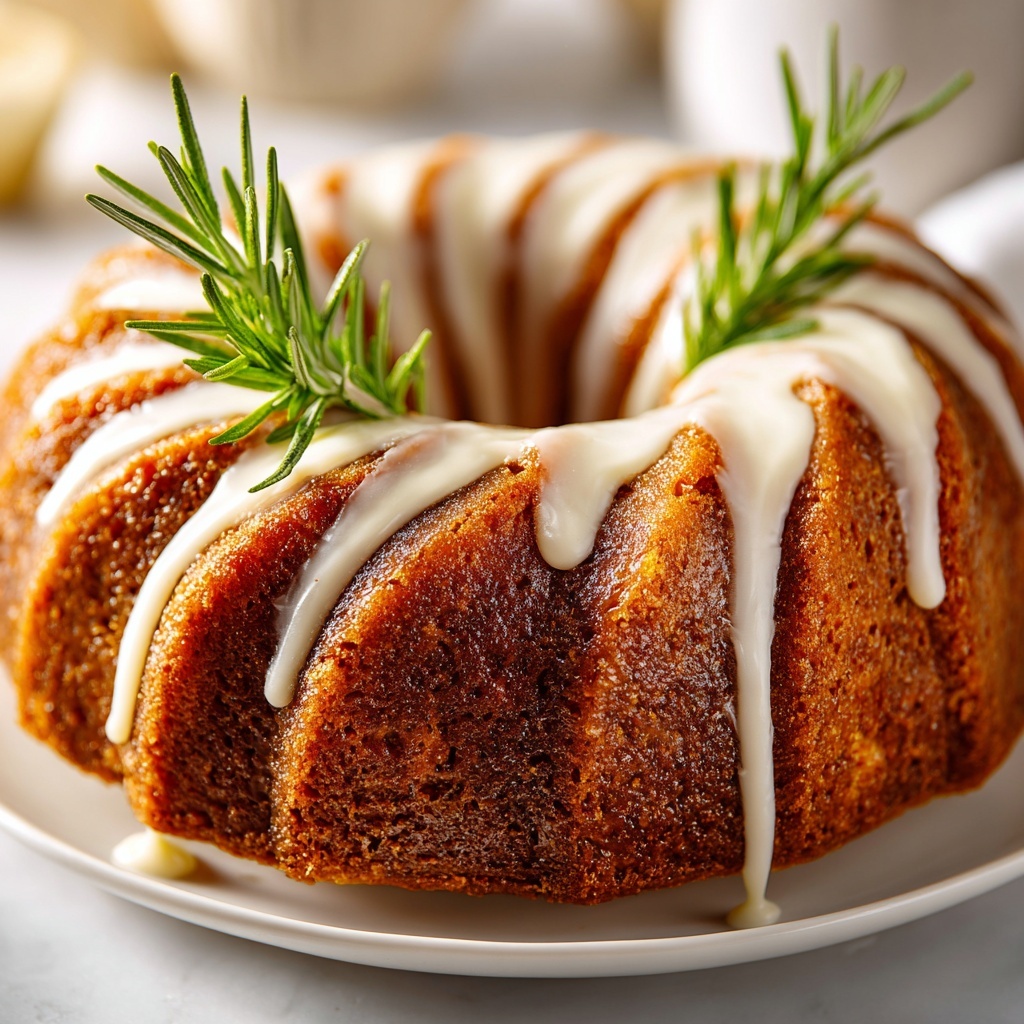
If you’re a fan of bright, herbaceous flavors paired with a soft, tender crumb, you’re going to fall head over heels for this Rosemary-Lemon Bundt Cake with Candied Rosemary Recipe. It’s a delightful cake that masterfully balances the zesty punch of fresh lemon with the aromatic earthiness of rosemary. Every bite is a journey, where the moist cake melts on your tongue, and the lightly sweetened candied rosemary on top adds a whimsical crunch and fragrant finish. Whether you’re baking it for a cozy afternoon tea or an impressive dessert centerpiece, this recipe captures a fresh, inviting vibe that’s simply irresistible.
Ingredients You’ll Need
Every ingredient in this Rosemary-Lemon Bundt Cake with Candied Rosemary Recipe plays a crucial role in creating its irresistible flavor and perfect texture. From the rich butter giving it a tender crumb to the fresh rosemary lending its unique earthy aroma, each component is essential.
- Unsalted butter (1 1/2 cups or 3 sticks): Brings richness and a velvety texture to the cake, plus ensures the right moisture.
- All-purpose flour (3 cups, plus extra): The structure base that holds everything together; spooned and leveled for accuracy.
- Baking soda (1 teaspoon): Helps the cake rise beautifully and stay light.
- Kosher salt (1 1/2 teaspoons): Enhances all the flavors, ensuring they shine through.
- Granulated sugar (2 cups for the cake, 1/2 cup for candied rosemary): Sweetens the cake and the decorative rosemary sprigs perfectly.
- Lemon zest (1 tablespoon) and lemon juice (2 tablespoons): Adds fresh citrus brightness and a tangy punch.
- Fresh rosemary (3 tablespoons finely chopped for the batter, 6 sprigs for candying): Infuses the cake with a fragrant herbaceous note and decorates the top elegantly.
- Large eggs (6): Provide structure, moisture, and richness for the cake batter.
- Pure vanilla extract (1 tablespoon): Adds warmth and depth to the flavor profile.
- Sour cream (1 cup, at room temperature): Keeps the cake moist and adds a slight tang.
- Egg white (1 large, for candying): Helps sugar stick to the rosemary sprigs to create that crunchy coating.
- Confectioners’ sugar (1 1/3 cups): The base of a smooth icing that ties everything together.
- Water (1 tablespoon plus more if needed), pinch of kosher salt: Used in the icing to reach the perfect consistency.
How to Make Rosemary-Lemon Bundt Cake with Candied Rosemary Recipe
Step 1: Prepare the Dry Ingredients
Start by whisking together your flour, baking soda, and salt in a medium bowl. This ensures the leavening and seasoning are evenly distributed throughout the cake, setting you up for a perfectly risen and flavorful crumb.
Step 2: Cream Butter, Sugar, Lemon Zest, and Rosemary
Using an electric mixer, beat the unsalted butter, granulated sugar, freshly grated lemon zest, and finely chopped rosemary on medium-high speed until the mixture becomes light and fluffy. This step is critical because it incorporates air into the batter, giving your cake a lovely lift and bright notes from the lemon and rosemary.
Step 3: Add Eggs and Flavors
Reduce your mixer speed to medium and add the eggs one at a time. Beat well after each addition to ensure a smooth blend. Then add vanilla extract and lemon juice, which will layer in more citrus goodness and a hint of classic warmth.
Step 4: Alternate Flour and Sour Cream
Set your mixer to low and add the flour mixture and sour cream alternately, starting and ending with the flour. This alternating addition keeps the batter delicate and prevents overmixing, which can cause the cake to be tough.
Step 5: Bake the Cake
Pour your batter into a buttered and floured Bundt pan, smooth the top, and gently tap the pan on your counter to release any air bubbles. Bake at the proper temperature for 50 to 60 minutes, covering with foil after 30 minutes if the cake starts to brown too quickly. You’ll know it’s ready when a toothpick inserted comes out with just a few moist crumbs.
Step 6: Cool the Cake
Cool the cake in the pan for 10 minutes before inverting it onto a wire rack. Allow it to cool completely at room temperature, which helps set the crumb and makes it easier to decorate.
Step 7: Candy the Rosemary
Whisk the egg white until frothy, then lightly brush the rosemary sprigs with it using a pastry brush. Dip each sprig into granulated sugar, ensuring they’re well coated. Place them on a prepared baking sheet and let them dry for about an hour. This creates those beautiful, crunchy, and sweet candied rosemary sprigs that become the perfect garnish.
Step 8: Prepare the Icing
Mix confectioners’ sugar with vanilla extract, a pinch of salt, and water until you achieve a smooth, slightly pourable icing. Adjust the consistency with a little more water if needed—it should be thick enough to cling to the cake but still drizzled elegantly.
Step 9: Assemble and Decorate
Drizzle the icing evenly over the cooled cake, then artfully arrange your candied rosemary sprigs on top. This final touch not only adds flavor and texture but also turns your cake into a showstopper perfect for any occasion.
How to Serve Rosemary-Lemon Bundt Cake with Candied Rosemary Recipe

Garnishes
Besides the candied rosemary sprigs, a few fresh lemon slices or a light sprinkle of powdered sugar can add extra brightness and charm to your presentation. The contrast of simple white confections with green sprigs makes the cake look as delightful as it tastes.
Side Dishes
This cake pairs beautifully with a dollop of whipped cream or a scoop of vanilla bean ice cream to complement the lemon and rosemary notes. Serve alongside a pot of hot herbal tea or a fresh cup of coffee for a balanced snack or dessert experience.
Creative Ways to Present
Try serving individual slices with a small sprig of fresh rosemary and a light drizzle of honey on the plate. For a party, slice and arrange neatly on a decorative platter with edible flowers to impress your guests visually and palate-wise.
Make Ahead and Storage
Storing Leftovers
To keep your Rosemary-Lemon Bundt Cake fresh, wrap it tightly in plastic wrap or place it in an airtight container and store it at room temperature. It will stay moist and delicious for up to three days—perfect if you want to enjoy it over a few leisurely days.
Freezing
If you want to make this cake in advance, it freezes beautifully. Wrap it tightly in plastic and then foil to avoid freezer burn. Thaw overnight in the refrigerator before bringing to room temperature to serve.
Reheating
If you prefer your cake slightly warm, pop a slice in the microwave for about 15–20 seconds. This quick warm-up enhances the lemon aroma and softens the icing for an even more comforting bite.
FAQs
Can I use dried rosemary instead of fresh?
While fresh rosemary is ideal for its vibrant flavor and aroma, you can substitute with dried rosemary. Use about half the amount since dried herbs are more concentrated. However, the candied rosemary garnish works best with fresh sprigs.
Is it necessary to use sour cream in the batter?
Sour cream adds moisture and a subtle tang that balances the lemon and rosemary’s brightness. You can substitute with full-fat yogurt if needed, but avoid low-fat versions as they can change the texture.
How do I know when the cake is done baking?
Insert a toothpick or skewer into the center of the cake; it should come out with a few moist crumbs attached but not wet batter. The edges should also start to pull away slightly from the pan.
Can I make this cake gluten-free?
Yes, with some adjustments. Use a gluten-free flour blend designed for baking and add a binding agent like xanthan gum if your blend doesn’t contain it. Keep in mind that the texture may vary slightly.
How long does the candied rosemary last?
When stored in an airtight container at room temperature, candied rosemary sprigs maintain their crispness for up to a week. They’re a delightful addition to teas and desserts beyond this cake too.
Final Thoughts
This Rosemary-Lemon Bundt Cake with Candied Rosemary Recipe is truly one of those special treat-and-share moments in the kitchen. The way the herbs and citrus come together in a moist, tender cake crowned by sparkling, aromatic rosemary makes it a recipe you’ll return to time and again. I can’t wait for you to try it and fall in love with its charm just like I have.
Print
Rosemary-Lemon Bundt Cake with Candied Rosemary Recipe
- Prep Time: 20 minutes
- Cook Time: 1 hour
- Total Time: 1 hour 20 minutes
- Yield: 12 servings
- Category: Baking
- Method: Baking
- Cuisine: American
Description
This Rosemary-Lemon Bundt Cake is a delightful blend of zesty lemon and fragrant rosemary, baked to perfection in a classic bundt pan. Topped with a sweet vanilla glaze and garnished with candied rosemary sprigs, this cake offers a moist, tender crumb and sophisticated flavor that’s perfect for any occasion.
Ingredients
Cake
- 1 1/2 cups (3 sticks) unsalted butter, at room temperature, plus extra for pan
- 3 cups all-purpose flour, spooned and leveled, plus extra for pan
- 1 teaspoon baking soda
- 1 1/2 teaspoons kosher salt
- 2 cups granulated sugar
- 1 tablespoon lemon zest
- 2 tablespoons lemon juice
- 3 tablespoons finely chopped rosemary
- 6 large eggs
- 1 tablespoon pure vanilla extract
- 1 cup sour cream, at room temperature
Candied Rosemary
- 1 large egg white
- 1/2 cup granulated sugar
- 6 sprigs rosemary
Icing
- 1 1/3 cups confectioners’ sugar
- 1/4 teaspoon pure vanilla extract
- Pinch kosher salt
- 1 tablespoon water (plus more as needed)
Instructions
- Make the Cake: In a bowl, whisk together the flour, baking soda, and salt until combined to ensure even distribution of the leavening agent and seasoning.
- Cream Butter and Sugar: Using an electric mixer, beat the butter, granulated sugar, lemon zest, and finely chopped rosemary on medium-high speed for 3 to 4 minutes until the mixture is light and fluffy, which aerates the batter for a tender crumb.
- Add Eggs and Flavorings: Reduce speed to medium. Add eggs one at a time, beating well after each addition to maintain emulsion. Then add vanilla extract and lemon juice, mixing until incorporated.
- Incorporate Dry Ingredients and Sour Cream: Reduce mixer speed to low. Alternately add the flour mixture and sour cream to the batter, starting and ending with the flour mixture. Mix just until everything is combined to avoid overmixing which can toughen the cake.
- Prepare and Bake: Pour the batter into a buttered and floured bundt pan. Smooth the top and tap the pan on the counter to release air bubbles. Bake at 350°F (177°C) for 50 to 60 minutes, covering with foil after 30 minutes if the cake browns too quickly. The cake is done when a toothpick inserted into the center comes out with loose crumbs.
- Cool the Cake: Let the cake cool in the pan for 10 minutes. Then invert it onto a wire rack and allow it to cool completely before icing.
- Make Candied Rosemary: Whisk the egg white until frothy. Lightly brush each rosemary sprig with the egg white using a pastry brush, then dip them into granulated sugar to coat thoroughly. Place the sugared sprigs on a prepared baking sheet and let dry for 1 hour until candy-coated and crisp.
- Make the Icing: In a small bowl, whisk together confectioners’ sugar, vanilla extract, pinch of kosher salt, and water, adding water gradually to reach a smooth, pourable consistency.
- Assemble and Decorate: Drizzle the icing over the cooled cake and then garnish with the candied rosemary sprigs. Serve and enjoy the harmonious flavors of lemon and rosemary.
Notes
- Ensure all ingredients, especially butter and sour cream, are at room temperature for better mixing and texture.
- When adding flour and sour cream, mix minimally to prevent overdeveloping gluten, which can lead to a dense cake.
- If rosemary is too strong for your taste, reduce the amount slightly.
- For easier removal, make sure to grease and flour the bundt pan well.
- Allow the candied rosemary to dry completely to maintain its crispness as a beautiful garnish.
- The icing consistency can be adjusted by adding more or less water depending on your drizzle preference.